Jessie Stover: Hey everyone, and thanks for joining, and thanks to all of you who are watching. My name’s Jessie Stover, I’m the Director of Customer Operations at The Flybook, and I’m going to be moderating today’s conversation, sharing what we’re seeing with Flybook’s data, and what my guests are also going to share with us. I’d like to take a quick minute to introduce Aaron Lieberman who is with the America Outdoors Association, and Zeb Smith, who is with Zebulon. Aaron, if you want to tell us a little bit about yourself, that would.
Aaron Lieberman: Yeah, thanks, Jessie. Aaron Lieberman, I’m the executive director of the America Outdoors Association. I think everybody who’s watching this will probably be pretty familiar with America Outdoors, but we are the National Trade Association for Recreation Service Providers, Outfitters, Guides, primarily public land, but also lots of private land operators. And looking forward to the conversation, share some of the survey results that we’re seeing so far.
Zeb Smith: Cool. Yeah. And, I’m Zeb Smith, owner of Zebulon LLC. You guys can call me Zeb. Zebulon is a, operation that helps operators grow revenue, grow people, grow profits. So we’re a small and mighty team, myself, Corey and Dalton. Uh, everything from people growth to revenue growth.
Jessie Stover: That’s awesome. I’m really excited to speak with you guys today. We’ve all worked together for quite some time with Flybook, America Outdoors, and Zebulon. I think that this is a great team to come together to talk about how this season went. We’re going to talk about a few different data points that we’ve collected from the Flybook, that Zebulon has collected from his customers,and that Aaron and the American Outdoors Association have collected from just talking to operators across the United States this year. Today’s data with the Flybook, what we’ve pulled is we have taken all of our information from Memorial Day to Labor Day of 2026.
Jessie Stover: And seeing trends of, like, what booking trends are happening, what those reservation amounts look like, what the holidays look like compared to 2025 to 2026. Ours is very data driven, and I think that that’s an interesting point for us to share. As a software company, we get to pull different data than what Aaron sees when he’s actually talking to the operators and what Zeb sees when he’s actually working with these operators to be successful in their business.
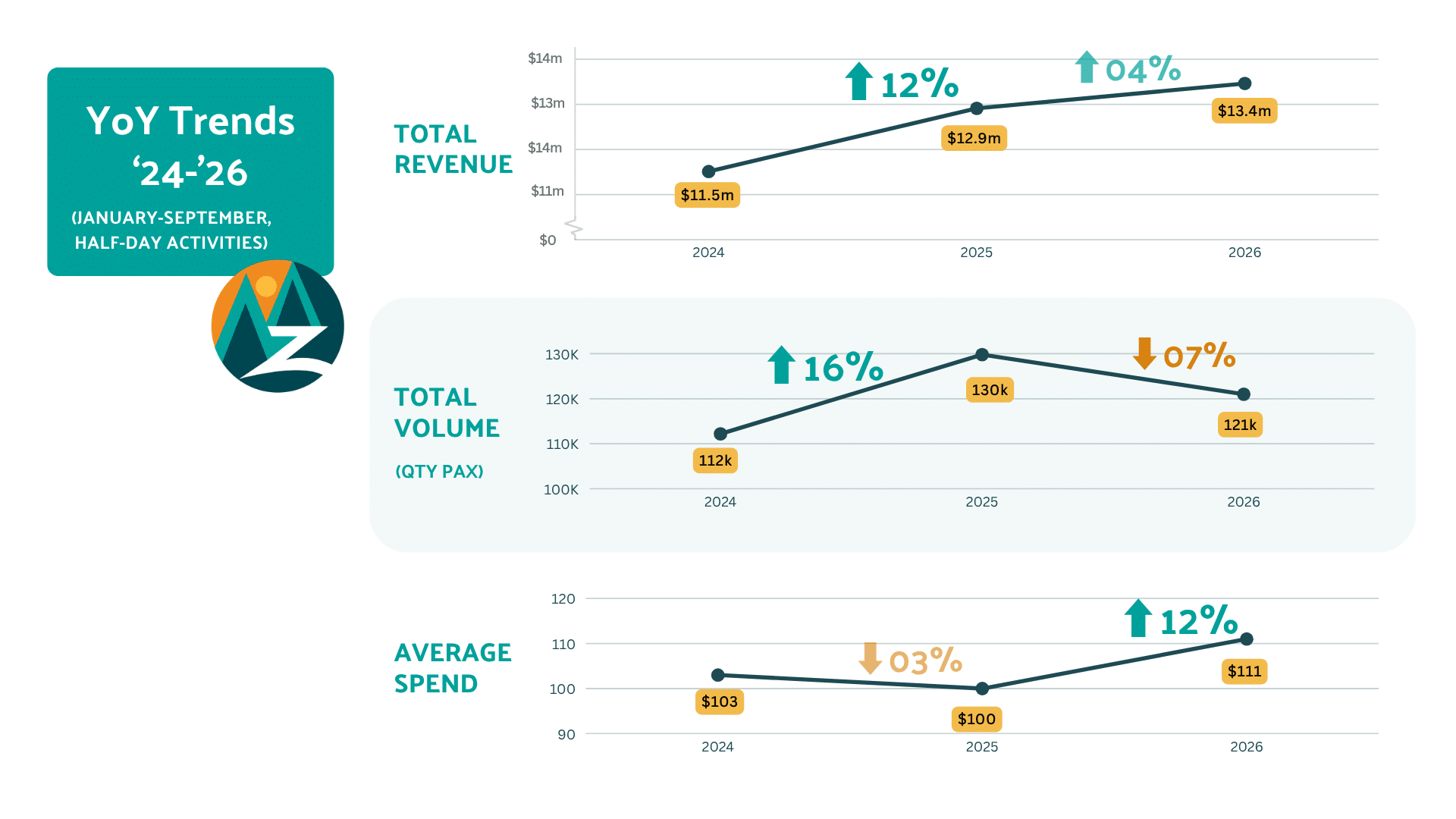
Jessie Stover: Some of the common themes that we have come across as we’ve been having meetings, getting together to talk about this with you all today, is that it really was… A year of we saw bookings were down, but the value of those bookings was up. And that to me is an interesting talking point for everybody on this call today. Zeb, I’m interested to know what you saw with your operators and if they saw that same trend.
Zeb Smith: Yeah, good question. So at any given point, we’re usually working with around a dozen operators. And so they’re going to be from different backgrounds, you know, hiking, rafting. We’re going to have lodging, non-lodging. So really the full gamut of operators overall. When we look at a snapshot of the year volume was down about 7%. And it’s going to be January through the end of September. The average spend and our mark for average spend is, what is it that each of your customers are spending as they’re walking through the door.
So that was up 12%, which was a nice recovery, between 24 and 25. It dropped. And we think that consumers were, being more conscious of kind of their of their purchasing last year. And that was a rebound this year. We did start to see that average spend start to climb and as a result, revenue did increase. When you do zoom into the data of it, however, it was really a boom and bust season. We had everywhere from a 35% increase in volume all the way down to a 35% decrease in volume, and everything in between. So, it wasn’t so much the national trends that we had been seeing really post-pandemic. It was really isolated to unique locations, unique operators. It was more of a small econome I think driving force this year.
Jessie Stover: That’s very interesting. Aaron, did you, as you’ve talked to operators this season, have you seen that they’re discovering that as well in their own data?
Aaron Lieberman: Yeah, so I think there’s some alignment. I would zoom back out just really briefly first, Jessie, just to note. So, the numbers that I’m primarily going to be speaking to, or drawing from, are from, uh, the still-in-progress 2026 Industry Trends Survey.
Aaron Lieberman: Um, I may sprinkle in some anecdotal conversations in there, but primarily it’s survey-driven, and so just be clear about what that is for folks listening. Um, our numbers are the share of operators who said something happened in the ranges they chose. So they’re not, unlike I think, you know, the more granular information that Zeb, you and Jessie are drawing from, I think our numbers are more so, you know.
Aaron Lieberman: These are. These are more how people think they did what they think drove that performance, what they think next year will look like that may be based on data. It may not but it’s primarily from those survey results. So with that caveat, I would say to your question, it does generally track, and when I say it does, just to remind folks after my tangent there, Like, the short version is fewer bookings, but that based on survey responses so far, the bookings that folks did have, uh, were, like, worth more.
Aaron Lieberman: Right? Or they charge more, or there was a higher value in them, and the way that we have that information is pretty top level. People aren’t providing the granular breakdowns, right? So, similarly to Flybooks, Data, Jessie.
Jessie Stover: Yeah.
Aaron Lieberman: like, you have bookings, not necessarily guest, uh, rates, right? So it’s the booking value, not the guest, the per customer value. With AOs, it’s gonna be similarly sort of top level, where I think Zeb probably has a bit more granularity in his data, but the overall trends are saying the same thing from the operator side. About half of operators that have responded to the survey at this point increase their average price and about half had fewer guests this past season than they did the season prior.
Aaron Lieberman: So profit didn’t necessarily follow price. About one in eight said profit was up and a little more than a third said it was down last year, about 3 in 10 said profit was up by the time the survey was complete.
Jessie Stover: Yeah, that’s very interesting. So, I’m glad that you did bring that up, because it is true, but I think that’s why you’re so valuable to this conversation, is because sometimes the data doesn’t speak to how our operators are feeling, which is also very important in how the season went. With the Flybook numbers, we did see that everybody was down about 8% in reservations with tracks with Zebs companies as well. And that but each reservation was worth about 7% more. So that just means we’re taking some caveats with this by saying we see our operators that use our software. That means they’re offering more like more than one activity.
Jessie Stover: So they’ve diversified the offerings that they’re having. Some of them have chosen to increase their lodging capacity. So they’re either putting in campgrounds or small cabins because we did see an increase in room bookings. So the room bookings this year grew about four and a half percent from our users. But what was interesting to me with that is that the room bookings increased, but the money that they made off them did not. So they’re adding those room bookings to the reservations to get the value of the reservation to be more, but not really charging more for the lodging itself. That was very, very interesting to me this year. And that seems to follow what the operators feel and what you’re seeing as well.
Zeb Smith: You know. When you mentioned your, your audiences that were growing in terms of that booking value, it’s because they were expanding in some form of another. If I were to like look at our case by case situation, individual operators, ’cause I mean we’re working super intimately with these guys every week of the year, we’re watching these numbers, we’re driving, we’re calling audibles, and to put them into buckets, especially when it comes to the hard dollar amount, or as well as volume, in terms of volume and number of users or passengers during the day, uh, there were some standard themes. So, the operators that really climbed in volume.
Zeb Smith: We’re in expanding markets, so either they made purchases, they purchased another outfit, maybe they had a new location, or we were innovating new offers and they were, they were creating new offer lines. So that’s where a lot of the growth came from this year, uh, for those that were in stable markets or their, their business was stable, they weren’t expanding, but there wasn’t evidence of shrinking. You know, those were just kind of hovered right around the middle. There wasn’t a general theme, some up, some down. And then those that were the losers, uh, we had some big winners, we also had some big losers. We could identify very key breaks within their marketing efforts, like a Facebook profile that was hijacked, or.
Jessie Stover: Yeah.
Zeb Smith: We may have had, like, an operator manager. Actually, this wasn’t marketing. This was operations related. Went kind of rogue and then got rid of a lot of staff. And so therefore they couldn’t have an end of season. And also to the other things that were driving a lot of those is. It was a cool spring season, so a delayed holiday weekend, uh, Memorial Day weekend, as well as cooler seasons led to a slow start. And then at the very, very end in the month of September, there was a real quick drop off. I think across the board everybody did well.
Zeb Smith: June, July, and August during, really, the peak season, but it was those shoulder months and the taper that took place. So we’re still trying to get a lot of September stuff in order, but that just seems to be the general theme on that front.
Jessie Stover: That’s interesting to me.
Zeb Smith: So to your point, we we definitely have buckets.
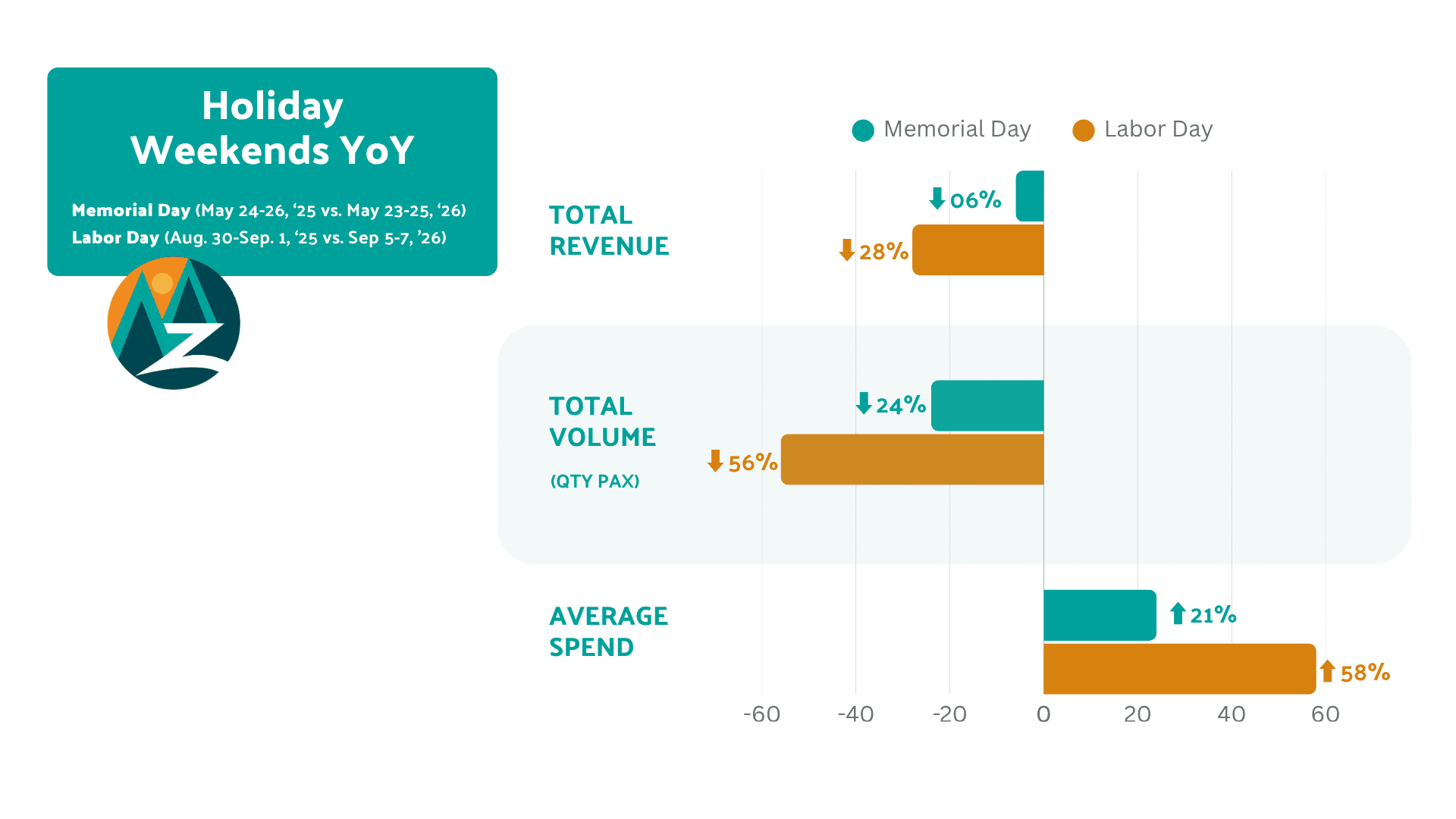
Jessie Stover: Yeah. Did you notice some of our data was driven around holiday weekends, like the Memorial Day weekend and Labor Day. Of course, they fall on different months this year for Labor Day. So sometimes it’s hard to like for data, true number data points. It’s hard to do apples to apples there. But.
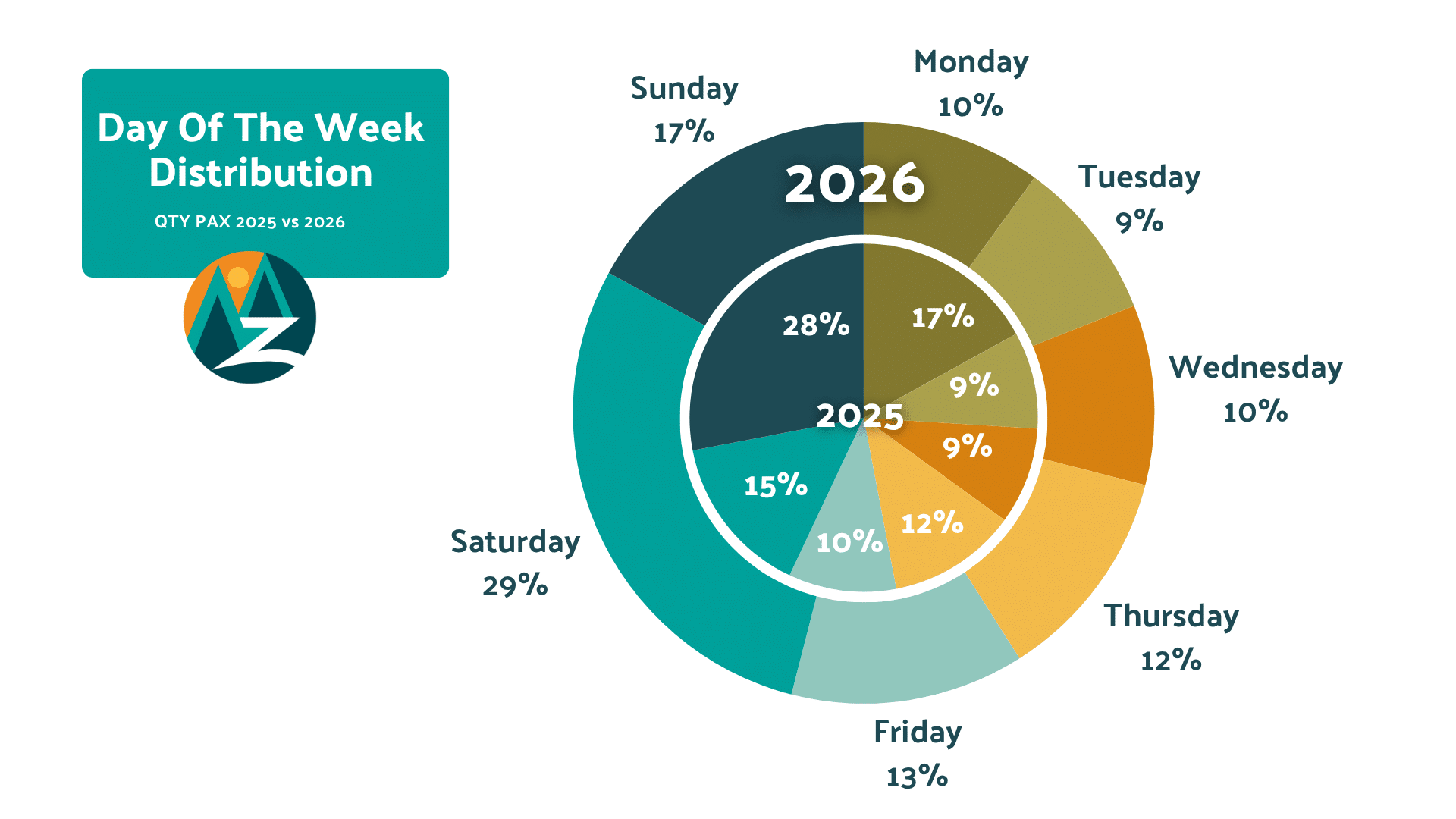
Jessie Stover: We did see that there was just a general decrease in long weekends this year, so more bookings through the week, less bookings on Sundays. I’m interested to hear from you and Aaron both on if that’s something that your operators have discussed.
Zeb Smith: Well, what was cool is we actually didn’t pick up on that at all until you guys shared with us that information, and then we looked at it, and it corroborated what you had said. It was like, oh, wow, we didn’t even pick up… we didn’t see this during the season, we weren’t talking about it at all with the operators, but you guys called it out, and then our data confirmed it.
Zeb Smith: Uh, and what’s interesting with our data, too, is, I mean, we’ve got a dozen operators with a dozen different reservation systems, so, uh, to see that continuity, especially the drops in Sundays, that was super, super interesting. I did not expect Sunday universally to drop off. Coincidence, possibly, but I’d be curious to see if that’s, uh, one of the talking points, that people mention post-fall watching this, or at the America Outdoor Conference this winter?
Jessie Stover: Yes.
Aaron Lieberman: Yeah, we didn’t have that level of granularities, but we didn’t ask about certain days of the week or those types of patterns. We did ask about booking windows more generally. I’d say the survey results are still a bit spare to be able to extract real insights on those booking windows.
Jessie Stover: Aaron, did you guys get any feedback?
Aaron Lieberman: Yet from the year over year survey data, so we have some other things that came through, and how, like… I mean, the first part of this conversation, I think, so far was where there’s some degree of agreement across the different data sets about overall themes in the season, right? Certainly not universal, um, but overall themes that seem to come through in the data, and that is, you know, uh, less… in short, less volume, but, uh, a significant number of operators also still saw increased revenue, or increased their prices accordingly, right?
Jessie Stover: Yeah.
Aaron Lieberman: We have some additional information about what people think moved the needle for them, like what they think influenced their outcomes over the season, but not so much on the granular day of week type of thing.
Jessie Stover: I’m happy to get into what moved the needle there. I mean, it’s hard for us to pinpoint, just because, like I said, we’re just looking at reservations and data, but I’m interested to know from that survey what the operators thought moved the needle for them this season.
Aaron Lieberman: Yeah, so there were, on our end at least, on the American Outdoor Survey data, which again, we’ll see if this changes by the time we hit conference. It probably will to some degree, but the results we’re seeing so far are pretty strong in their internal agreement, Like we had more than eight in 10 operators who responded named vehicles and fuel as the biggest cost increases against under half of respondents last year.
Aaron Lieberman: Um, and that was, you know, for those folks who were saying, like, here was the biggest impact on my profitability, or here is why I think I was down, right? Um, among those operators whose profits fell, the economy, generally put, nebulously, was by far the 1st the 1st pause they attributed. So general economic conditions, followed by travel costs, essentially by the cost for their clients to reach the destination, and those costs that were consequent of fuel transportation. Things like that that operators couldn’t pass along, including wages.
Jessie Stover: Awesome.
Aaron Lieberman: We did also see one third theme. So sort of a cross-cutting one for both impacts on profitability. Things like that was fuel, but that was a subset of general economic conditions, more so for why you thought your profitability… where you thought your profitability was most impacted.
Aaron Lieberman: Um, and travel costs within that, right? So then 3, though, was also what I think, um, you both maybe had some thoughts on as well, though it’s a bit nebulous, which is weather and natural events is how we sort of categorize that. Weather and natural events in our survey data came up for about half of the respondents, which is roughly double last year so far.
Jessie Stover: Yeah.
Aaron Lieberman: What members described to me anecdotally as what those events are, are not going to be surprising, right? It’s smoke, fire closures, low water, algae blooms, um, on particular rivers, things like that. So those are some of the explanations that we’ve seen coming through pretty strongly so far for what people thought was moving their needle one way or the other.
Jessie Stover: We are going to run some more data points for that. From the first meeting that we had when we were talking about this discussion, I started talking with our data analyst, Jeremy, and he was like, we can’t get some detailed data. So I’m interested to see what that looks like and how it matches with what the operators feel, and then we can talk more about that when we get to the conference in December.
Jessie Stover: But we tend to have a lot of operators just in the Colorado area. I’m sure that’s no surprise to anybody that’s a big outdoor industry there, but they did suffer from some low water this season. Zeb, that’s where you guys are located. I know you have outfitters other places also, but is that something that they’ve brought up with you as well and that you saw?
Zeb Smith: Oh, yeah, definitely. I was mentioning earlier about the cool spring seasons. So you know the weather impacts that we saw immediately. And this is in that short term booking window. Again, we’re boots on the ground in this case, seeing when are passengers or customers getting on and making bookings right? They’re looking in the short term. So in the southeast there was a lot of.
Zeb Smith: lightning this year in that early spring season, so the zipline operators, when there was lightning in the forecast three days out, we saw a drop in terms of those advanced bookings. In the Midwest, there was a cool early summertime period, it was a little bit later, and also that was in Colorado, too. I mean, Aaron Gunnison, it was, it felt like spring weather all the way into the beginning part of the summer almost. So you know, that definitely had an impact. And then, yes, to your point, the fires, the smoke, those bigger catastrophic level ones. I was having a conversation with.
Jessie Stover: No.
Zeb Smith: David Costlow at the Colorado River Outfitters Association. Also, their numbers aren’t out, but in conversation with the operators there, he’s saying the average, they believe, is a 40% drop in passenger volume this year, which is a huge, huge number for a statewide mark. And so those are still to come out.
Jessie Stover: Wow.
Aaron Lieberman: Mm-hmm.
Zeb Smith: But you know, we can confirm that with our operations. Fortunately, we’re able to kind of stave that off a little bit. But, Aaron, you did mention profitability. And so I was just taking a look at as you’re chatting, just looking at some of ours January through the end of September.
Zeb Smith: August, about two-thirds of our operators were up in net operating income, and then only one-third was down, but September ended up being just a slow year, and across the board, and this was all over the nation, too, and different, different sub pockets, where at this point January through the end of September. Now it’s looking like 55%, maybe about 60% are going to be up in profit. So we’ll have more of that information. Specifically, when we do the America outdoor presentation. I mean, we always do our data share the industry brief, if you would. We also do the one in January. So we’ll have confirmed numbers with our small segment.
Jessie Stover: Yes.
Zeb Smith: But yeah, I mean, it’s echoing a lot of what you’re saying too.
Jessie Stover: Yeah, we saw… so I did have… we broke down regionally a little bit by our operators, and so we did see in Utah that bookings were up about 17%, and then in Colorado, we were down by 19%, which is still significant just for our pockets that we have operators in. That’s a big difference to be down in Colorado like that and up in Utah.
Jessie Stover: Do you have any customers or anybody that gave you feedback, Aaron, from either one of you on how they were able to weather that… this, no pun intended, but how they were able to weather that issue that they were having with some of these lightning and fires and the low water to still be able to run their season?
Aaron Lieberman: I mean, yeah, yes, and I would separate this into anecdotal, uh, and a smaller sample size versus this year’s survey results so far versus last year’s survey, sort of, separate those out. But in the 1st category 1st bucket there. Yes, I mean, generally speaking, folks who just by nature of their business model, whether doing like large groups, things like that just anecdotally said that they, their bookings were fine, right? They were booking further out ahead, they were outside of media cycles, they were outside of, sort of, weather events for, uh, primary triggers for booking or for cancellations, things like that, or for people just being trepidatious about going on a trip.
Aaron Lieberman: Also, I mean, beyond the booking window, obviously, weather and more importantly, folks attributed media coverage quite a bit to how they think they were impacted by proximate bookings, which makes sense, right? Like, at least for what you can see as an operator, if you’re out there running trips and all of a sudden whatever, the Washington Post runs a story about dangerously low water levels in X river system, or whatever else, like that. It stands to reason that that would potentially have an impact overall, at least on the meta level. But again, anecdotal and really difficult to draw any real conclusions from that, at least for my part.
Aaron Lieberman: One thing that we saw last year, so speaking briefly to the 2025 trend survey. One thing that seemed to come through, and I say seemed intentionally, because this is data from different operators, things like that, is that folks who seem to do better, uh, or whether, you know, uh, conditions, regardless if those were just general economic conditions or more localized conditions, were those that had more diversified offerings.
Jessie Stover: Great.
Aaron Lieberman: And one at least strong correlation in the 2025 survey data was, and this lines up, I think, with what you were saying, Zeb, and what we previously chatted about, Jessie, like lodging folks who offered lodging and other land based activities in addition to whatever their core activity was seem to… that seemed to correlate fairly strongly with, uh, maintenance of volume, which in turn correlated very strongly with overall profitability. Um, so far this year in the trend survey.
Aaron Lieberman: I’d say that seems to be emerging again, but the… I’d say the data… important that the data is still too light for this year’s to, I think, say with confidence that that will carry through, but it was a theme in 2025.
Jessie Stover: Sure. I mean, we had some data points to that, too, that it correlate… it seems to point towards that people are more willing to book a place to stay earlier and commit to that than the activity, probably because of the weather or the media coverage. But just a little background. My family also owns a rafting company in West Virginia, and they’ve been in business for 50 years. I mean, the weather is something that we always kind of tend to have to work around.
Jessie Stover: One of my favorite questions that people would always ask is, it’s raining today, are we still going rafting? Yes. The answer is always yes. The same way with low water. Are we still going rafting today? Yes, we’re still going rafting today. Would it be a different section? Yes. Will it be in a different type of craft? Yes, maybe. But yes, we’re still going rafting today, you know.
Aaron Lieberman: 100%. Maybe.
Jessie Stover: So I do think that this industry specifically has a great history of being able to work through those weather issues. Um, it’s probably the economic ones that are a little bit harder for us to, like, build our businesses around so that we do win in the end. Zem, I’m very interested to hear how you’ve talked to your customers about that. I know we talked a little bit about in our prep for this. Like what you guys did for your customers and who actually held up through the season. I’m just interested to hear more about that.
Zeb Smith: Well, as Aaron, you were… as you were… you were chatting that through, I was just kind of looking at the list of those that were in the expanding or stable markets, and then diversity was a big piece to it. Not just necessarily diversity between lodging and activities, but, you know, if you’re looking at different sections of the river expanding in that section, maybe different parts of the state regionally in those pieces, those that were really concentrated to just a single offer or like a bread and butter, but not much diversity past that. Those that those dropped, it was harder for them to recover. So there’s a diversity piece to it.
Zeb Smith: I think the other thing as I’m looking through this is the intentional off season marketing and sales aspect of it. That’s where is it? We’re an industry that’s notorious for just shutting Google ads off, for example, and then kicking them back up in the spring. Right. And if I’m looking at these operators that weathered the storm, it’s because we were doing group-based marketing and sales efforts through the wintertime, idealing ideal client profiles, ideal client journeys, refining those, getting customer lists, and actively going after group based bookings.
Zeb Smith: So rather than being at the whims of the general economy, capturing that extra 5, 10% volume within a groups to secure it, because those groups are bigger groups. It’s easier to capture, you know, 500 customers that way within a series of 15 or 20 groups versus just being at the beck and call what the weather and the general economy is going to do. So if I’m looking at this list, those that didn’t drop were either stable or expanding was due to diversification as well as the proactive traditional marketing and sales efforts, uh, not just, you know, posting the ads online and, you know, updating the website and that kind of stuff.
Jessie Stover: Yeah.
Zeb Smith: All of that, yes, absolutely happened, but it was that deeper, richer connecting to the customer efforts through the wintertime, that, I think, really paid off.
Jessie Stover: Aaron, I’m interested to know if in your survey you see a difference between single day operators and multi-day operators and how that looked this season. Just because we’re talking about groups, and those multi-day trips take a lot more planning, and they usually are larger groups, if they ended up having a better season this year than the single-day operators.
Aaron Lieberman: Yeah, I mean, I would add the same. I would offer yes is the answer. I would offer a similar caveat, which is this year’s data is still early, right?
Aaron Lieberman: So, last year, in the trans survey, uh, we certainly did see a, like, if not a bifurcation, then a divergence between day and multi-day operations, and I wouldn’t even limit that strictly to multi-day, like, white water versus single-day white water, multi-day, like, land-based versus single-day.
Jessie Stover: Right.
Aaron Lieberman: Generally, land base held up better, either remaining stable or growing in profitability last year. And so far in the survey results, that seems to be true for 2026 as well. Lodging so far in our survey results for 2026 is the only category, the only segment where more than 50% of respondents said that they grew.
Aaron Lieberman: Followed by guest ranches, which is, uh, just above a plurality of respondents said… of guest ranches, said that they grew. Multi-day whitewater is a bit ahead of day whitewater that tracks with last year. I think there’s a lot of possible explanations for that, but it probably has something to do with further out booking cycles, and that those trips are generally more limited.
Aaron Lieberman: So there’s, you know, higher demand as a function of that. But that’s a, that’s kind of a guess.
Jessie Stover: It is very interesting to me, though, that we all came up with this data individually. Like, we all ran this outside, like, we did not do it in a circle, and everything is still pointing to the same thing. I just want to, like, go back to that, that there were higher value reservations, lodging increased, but less bookings.
Aaron Lieberman: Mm-hmm.
Jessie Stover: And so I think that’s a very interesting theme for what this season is going to tell. We are all going to be at America Outdoors this year. Aaron, if you want to tell us the dates for that, that’d be great.
Aaron Lieberman: December 8th through 11th in Oklahoma City, New Rome.
Jessie Stover: In Oklahoma City. And Zeb, you are going to be presenting, and um… myself and my co-worker, Angel, are going to be presenting also this year for the Flybook, and you know, we’re going to focus more on being able to keep the… it’s more expensive to get new guests than it is to keep the guests that you already have, and so we are giving a little bit of a talk on hospitality, and I think that that just lends into this conversation that we’re having, that marketing is huge, word of mouth is a great marketing tool, and being able to offer great hospitality to your customers just allows them to come back over and over again, even if it’s not a great economic year. Like, I know…
Aaron Lieberman: And having that human connection, right? I didn’t think this before, Jessie, but to your point, one of the things that came through pretty strongly, again, all this is interpretation, right? Whenever any of us are looking at data, we may have varying levels of confidence based on how much time we spend with data, Zeb.
Jessie Stover: Yes.
Aaron Lieberman: But, like, it is ultimately hypothesis of what is causing what, or what is driving what, just to be clear. But we did see Jessie, um, come through pretty strongly that in a correlative way, those operators responded to last year’s survey who said that they made deliberate, insignificant, or notable investments in customer service. Like in humans, right? In customer service and in that interaction, that they did better. Or that they were in the cadre of folks who either held up or did better, is a better way of putting that. So, just another interesting overlap.
Jessie Stover: That’s very interesting. I know Zeb is smiling because I know he thinks that all the time. I know the type of people that he tries to go after to like be his core group of operators that he works with. And one of those things that he always talks about is just being able to invest in the people that work for you to grow your company. So whatever else you have to add to that, Zeb, we’re open to hearing there. I think it’s a great story to tell for our operators.
Zeb Smith: Oh, yeah, no, I appreciate that. Um, I do want to acknowledge, Aaron, a minute ago, you were talking about the land base and then those multi-day operations As you were speaking, man, I was just looking at the list and we were seeing that too. Land-based did float, whether they were day operators or multi-day operators or expand, uh, but in the higher ticket offer, you know, 1800 plus more per passenger, multi-day, or even single day efforts, those ones are the ones that there hasn’t been as much hesitation or fall back on. It’s really still that continued middle market. But yes, to your point, investing in the people, whether it be your managing staff, putting intentional efforts into actual connection with the customer base.
Zeb Smith: That’s absolutely huge. And surprisingly, some of the other, like, more traditional, like mailer efforts have been proving productive. I think we’re getting very overwhelmed and inundated on our devices a little bit. And, you know, I think people are starting to appreciate more of that immediate connection picking up that phone call and having a conversation, surprisingly, is proving well getting after those groups that you had a relationship with. But you haven’t had in a while touching base with them and being like, Oh, yeah, we didn’t end up switching. We’d love to come back to you guys, too. Thanks for the call.
Zeb Smith: Unreasonable Hospitality is a book that we read within the Eddy Group a couple of years ago, and baking that within every function of the business has really been proving to carry these operations forward. Also, too, I’m thinking about it when there was a land based operator who their burned lodge, their lodge burned down last year. That unreasonable hospitality element of calling up those reservations, making, giving people the option for delaying or basically forfeiting their refunds and just being really honest and forward with their customer base, it proved to be super lucrative. I mean, they were the ones that expanded the biggest this year, even after having such a such a rough one.
Jessie Stover: That’s amazing. I mean, that’s a real story to tell. Yeah. It’s interesting. That’s the book.
Aaron Lieberman: Turns out humans respond to humanity.
Jessie Stover: Right? That’s the book that we’re using for our presentation, too. We read it as well. It’s a great tool to use for anybody that is in the customer service industry to really — it’s all hospitality. You know, regardless of whether you have lodging or not, that’s really what we’re trying to provide an experience for the customers that are coming that they want to keep coming back over and over again.
Aaron Lieberman: Before we move on. I didn’t think about this previously, but I think it’d be interesting if we could try to dive into the data before the conference this year, and as we get more survey results as well, to try to parse out a little bit more detail or inferences from lodging in land-based versus single and multi-day whitewater, sort of the different segments in which both last year versus this year seem to perform better, either hold or grow versus go down in profits, and sort of cross reference that, or overlay it with some of the things we know have changed. So, for example, I think about like a multi-day river trip usually involves great distances by vehicle, right? Like just your shuttle and your turnaround is a very big part of your cost. So is food, which costs with food are associated with diesel and other transportation, right?
Jessie Stover: Yeah. Okay.
Aaron Lieberman: Whereas, say, you’re at a lodge like your primary thing is lodging. If your primary thing is lodging, you are not having to invest in this in the same way in those sort of key divergent costs that separate this year from a different year. I’m not sure that anything would come out of that comprehensively, but I think it’d be interesting both for us as an exercise, but also for operators to get a sense of, like, to sort of level set their assumptions about why they think… where they think their biggest hit came from, right? Like, was it actually the fuel, or was it other things?
Jessie Stover: I’m bringing it. I think it would be interesting for us, because we’re just now… I mean, we… this is a little premature. We just are excited to see what the season did. Like, everybody just ended, but we all still have numbers still coming in from the busy season. Most operators just… some operators here on the East Coast are still, like in West Virginia, we have our last weekend is coming up, so we still have rounds of numbers to come in through October. For us to get back together and get a little bit more granular so we can share more information with our shared customer base, I think it would be wonderful and continue this conversation and that we can meet and talk with people when we’re at the conference, I think would be a great opportunity for us to continue this conversation. Um, Aaron, do you have one big takeaway from this that you would like all operators that are watching this to leave with?
Zeb Smith: Yeah. Okay.
Aaron Lieberman: I think, if anything, I’d say, I don’t think I touched on this yet, but uh from the survey results. So far operators this year are coming out of this season are more hopeful about next year. Then I think the overall results might otherwise suggest. Um, and I think that’s positive. Like, about 4 in 10 of respondents so far in our ongoing survey expect their demand to grow in 2027, and about 7 in 10 respondents, uh, so far expect it to be flat or better.
Aaron Lieberman: And that’s… so, like, going into this season a little over… by contrast, that is, a little, uh, going into this season a little over a quarter expected growth. Their spending plans are a bit more careful, it seems like this year, like just over a quarter plan on no capital spending whatsoever. A quarter are putting it off because of rates. They say rates and uncertainty and fewer than about one in 10 plan to add any capacity, which is down from more than one in five last year.
Aaron Lieberman: So overall, I’d say my takeaway is… Folks… Certainly felt costs this year. They felt costs in fuel. They felt the economic… They felt pressure from their sense of the economy, right, and from their client’s sense of the economy.
Jessie Stover: Yeah. Okay.
Aaron Lieberman: And some of those costs are very real and trackable and objective. But they are going into next year feeling really optimistic, even comparative to last year. Very optimistic about next season. And I think that’s a really good place to start.
Jessie Stover: I agree. Zeb, how about you?
Zeb Smith: So the thing you’re mentioning teeing up for profitability, the one thing about profitability when you talk that, I would say a huge driver of profitability metrics is junk in, junk out, and also not having continuity on how you define profitability.
Zeb Smith: Corey and I actually spent the better part of July through September building out our basic training course and literally walking through operators at all levels, through core functions to track and identify those efforts, saying, hey, here’s where profitability was last year, here’s the modifications, thinking through the modifications on changing this year to drive next year. So, um, I would say attend our course, or attend the session we’re gonna have, and we’re gonna go through that a little bit. Um, also on our website, anybody can jump on and do that. I know we made it available to other beta testers already, and we’re getting a lot of really great feedback for it, so we can provide you the link if anybody wants to access that, especially anybody who’s wanting to grow their revenue and grow their profitability. It’s a… it’s a very well thorough bought-out thing that anybody can…
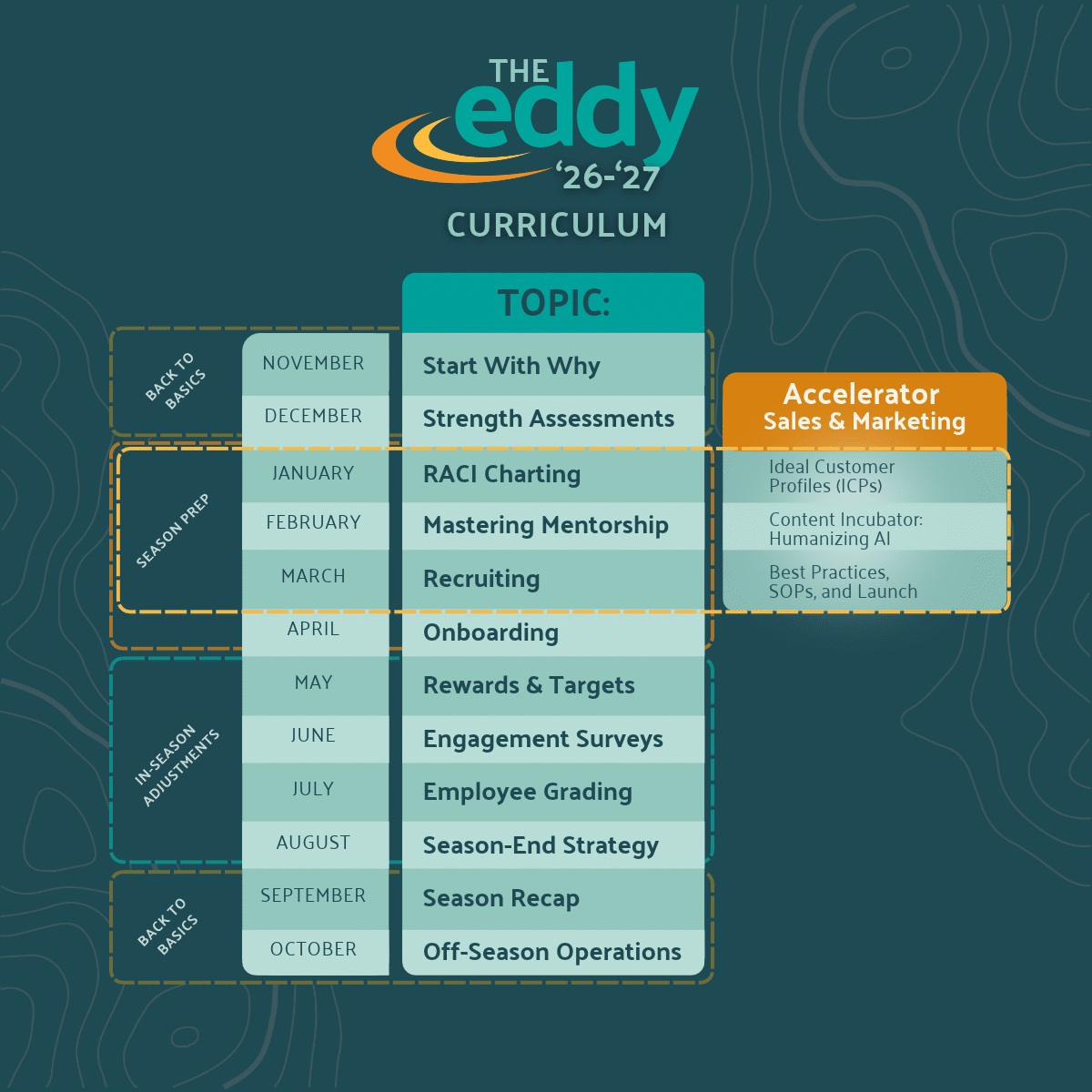
Zeb Smith: Execute on. Um, the other thing that we have coming up, uh, is gonna be our marketing and sales accelerator. So after trade show season’s over, after the bear winter months, uh, when people really start gearing up for it, uh, we’re gonna have our Eddy cohort go through and proactively identify those target audiences, their ideal client profile, their ideal client journeys, and start mapping out marketing and sales functions specifically for those group-based sales. And I think that’s going to be one of those ways to help hedge your bets against the demands of an economy or rising costs, or whatever else. That’s what I was going to say. You’re mentioning cost structure between like activities and assets, fixed assets, lodging, and all that. We go through that stuff in the course. So the course, the Eddy accelerator, and then chat with us while we’re at the session, um, America Outdoors.
Aaron Lieberman: I mean, I like Zeb. I think that’s certainly an endorsement for the presentation and for the course like, if because it seems to be. It is a consistent correlation across years of a like very robust survey like we have. We’ve we had incredible responses to our survey last year. It created a really good sample set but having like, if we see those correlations already having some sort of structured approach to what to do with that information, or how folks took advantage of that context or of those connections, I think, would be really valuable.
Zeb Smith: Well, I mean, I’ve been seeing… I’ve been growing revenue and profitability for operators across the nation for a decade, and I basically found the same. Like the same exercises that we applied across all of them, like clockwork. Like these were the top line, midline, red line, anyways, all these pieces. And I was just like, you know what, this is so consistent and so well and regardless of what their backgrounds are.
Zeb Smith: But that’s what I baked in the course. So I mean, literally, it’s what we go through with every client in the 1st 90 days of working with them, and anybody can go through and do it on their own at this point. So that was our intention of just helping the operators. All boats float with the rising tide right? So there’s no point in safeguarding that information. It’s all available to anybody, and people can do it. Yeah.
Aaron Lieberman: Yep.
Jessie Stover: Yeah. I mean, I think that the whole point of this, the 3 of us getting these 3 businesses being together is that we really do want to be a part. We are a part of this outdoor recreation community, and we want to give people the tools to be successful as a software company. Sometimes it’s hard for us to separate ourselves from the tech side and the outdoor side. But at the Flybook, we’re pretty lucky that most of our people that work for us and myself come from the outdoor industry. And so we want to be able to give you tools that you can use that actually allow you to do what you love, which is talk to your customers, be outside, run your trips, and then, you know, let the technology be as easy as possible for you.
Jessie Stover: to manage your business. And I think that these types of conversations are important. I’m really glad that we did this today. I’m excited to do more of these. I think that we could actually share some more information, um, when we’re together at America Outdoors. I… and… for everybody that’s going to the conference to go to Zeb’s presentation, and to ours, and to stop and talk with Aaron or Karen that are from America Outdoors. They have been a great help, even to.
Jessie Stover: small operators who have little questions. They are a great resource. Zeb, you’re a great resource to those companies that are really trying to grow. And at the Flybook, we just love to make relationships with everybody that’s using our software. And I think that the biggest thing from this is we talk about a lot of down numbers, but I like the fact that it really was genuinely, even if it was a difficult season, it was still a good season, and people have this outlook if it’s going to be better next year. I think that’s the most important thing to take away here, is that there are tools that we can offer them to allow for a growth year in 2027.
Aaron Lieberman: Yeah, people were adaptive last year. They’re going into next season, I think, taking away the lessons of being adaptive to, like, external circumstances they can’t control, and they’re feeling optimistic about that. And I do think, like, this is a great conversation. I’m looking forward to your guys’s presentations at the conference and to bringing all or bringing all of this home. I mean, that’s, you know, it’s one of the reasons. Primary things are government affairs, all those other, all that other work we do, but it’s one of the areas where America Outdoors shines. It’s like bringing people, bringing incredibly smart people like y’all together, but also just giving outfitters the opportunity to get some different perspective, right? It’s really easy to get locked into.
Jessie Stover: Thank you.
Aaron Lieberman: your drainage, or to your state, even, like, whatever was happening there. But it takes zooming out and seeing sort of cross-cutting trends, and what seems to drive either maintenance or growth for other operators in similar conditions in different parts of the country, I think, to really take away some of those lessons, so… All to say… Thanks for, thanks for organizing this.
Jessie Stover: Yes, this has been great. Thank you guys so much. This has been so wonderful, and we hope to see you all at America Outdoors.